Water damage emergency: what to do in the first 24 hours in Charleston
By Priya Tan · Updated 2026-07-01
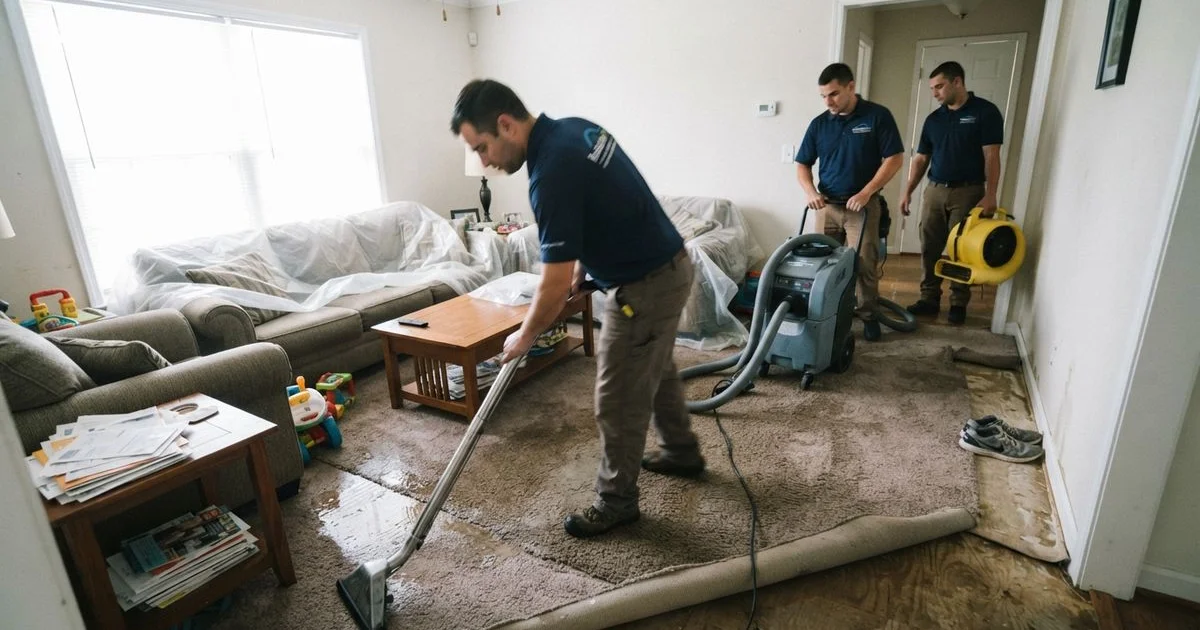
The first 24 hours after a pipe bursts or water gets into your home decide a lot about how big the problem becomes. Charleston’s humidity gives mold a head start once materials are wet, so speed matters more than perfection here.
Step 1: stop the water
If it’s a plumbing failure, shut off the water at the source, or at the main shutoff if you can’t isolate the specific line. If water is anywhere near an outlet, switch, or electrical panel, shut off power to that area at the breaker before you do anything else. This isn’t optional: standing water and live electricity is a genuine safety hazard, not just a property one.
Step 2: document before you move anything
Take photos and a short video of the water source, how far it’s spread, and anything visibly damaged, furniture, flooring, belongings. Do this before you start moving things or mopping up. Insurance claims lean heavily on early documentation, and it’s much harder to reconstruct the original scope once cleanup is underway.
Step 3: get standing water out
| Amount of water | What to use |
|---|---|
| Small spill or splash | Towels, mop |
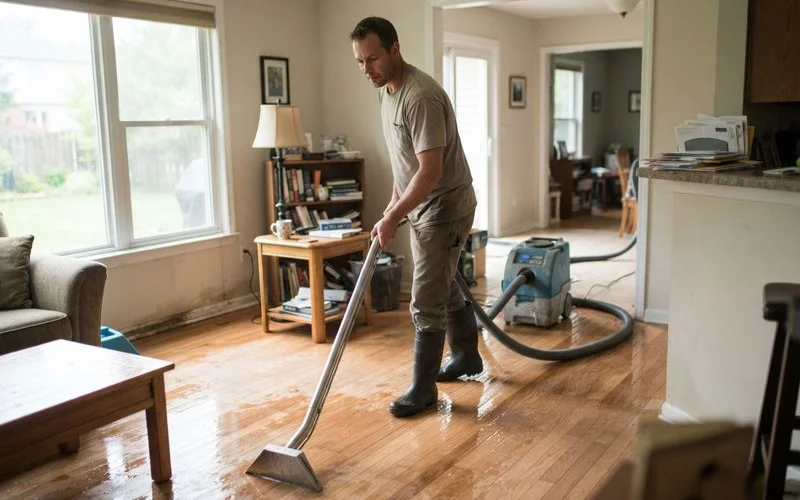
| Several inches, contained area | Wet-dry shop vacuum rated for liquids |
| Significant standing water, multiple rooms | Professional extraction equipment |
Never use a standard household vacuum on water. It’s not built for it and creates a real shock hazard. If you don’t own a wet-dry vacuum and the water is more than a small spill, this is often the point where calling a restoration crew makes more sense than improvising with what’s on hand.
Step 4: start drying immediately
Open windows if the weather allows, run fans, and use a dehumidifier if you have one. The goal is to get moving air across wet surfaces as fast as possible. Move furniture and rugs off wet flooring so air can reach both sides.
Step 5: call your insurer
Report the event the same day if possible. A prompt report, paired with your photos, gives you the strongest position if you end up filing a claim. Ask whether an adjuster needs to see the damage before you make repairs, since some policies expect documentation before cleanup goes further than immediate water removal.
Step 6: decide if you need a professional
If the water reached a wall cavity, subfloor, or crawlspace, or if standing water sat for more than a few hours, it’s worth having a technician assess moisture levels rather than assuming towels and a fan handled it. Materials can look dry on the surface while staying wet underneath, which is exactly the condition mold needs. A same-day or next-day inspection, common among Charleston restoration crews after an active leak, catches this before it turns into a bigger job.
If you’re renting, not owning
Report the leak to your landlord or property manager immediately, in writing if possible, even if you’re also taking your own steps to limit the damage. Photograph everything the same way an owner would, since it protects you if there’s ever a dispute about what caused the damage or how quickly you reported it. Your renter’s insurance, if you have it, typically covers your own belongings; the structure itself is generally the landlord’s responsibility to address.
What not to do
Don’t wait to see if it dries out on its own if the area is larger than a small spill. Don’t run the HVAC system if water may have reached ductwork, since that can spread contamination before anyone’s had a chance to check it. And don’t skip the photos, even when you’re focused on getting water out, because that documentation is hard to recreate later. If the water came from a storm rather than a plumbing failure, the hurricane season prep guide covers how to get ahead of it before the next one.
Start from the homepage to find Charleston restoration providers who handle emergency response, and see our methodology for how they’re ranked.
FAQ
- How fast does mold actually start growing after water damage?
- Mold can begin colonizing wet drywall and other porous materials within roughly 24 to 48 hours, which is why the first day matters more than people expect.
- Should I try to dry everything myself before calling anyone?
- For a small, contained spill, yes, towels, fans, and a dehumidifier may be enough. For standing water, a soaked carpet, or water that's reached a wall cavity, professional extraction and drying equipment work faster and more thoroughly than anything at home.
- Is it safe to use a regular vacuum on standing water?
- No. A standard household vacuum isn't built for water and creates a real electrical shock risk. Use towels, a mop, or a wet-dry shop vacuum rated for liquids instead.
- What should I photograph before I start cleaning up?
- The source of the water, the extent of the spread, and anything damaged, before you move furniture or start drying. These photos matter for any insurance claim you file later.