Buying an older Charleston home: what to check for water damage and mold risk
By Priya Tan · Updated 2026-07-18
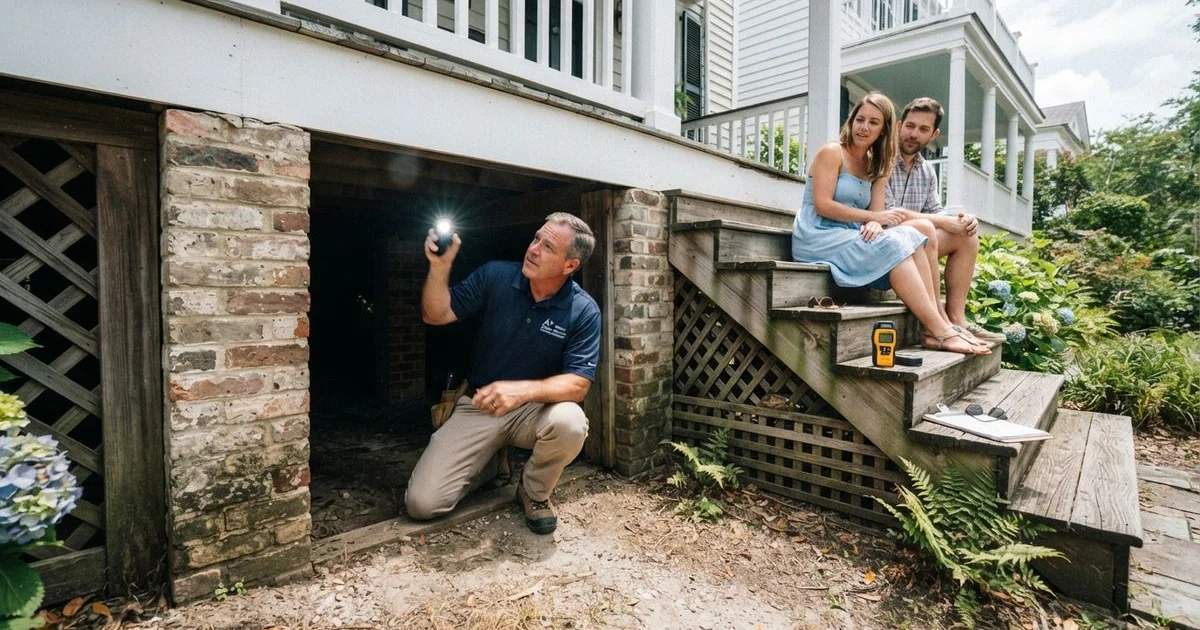
Charleston’s older homes have real character, and often a crawlspace, aging plumbing, and decades of small repairs that don’t all show up on a listing photo. Knowing what to look for before you close protects you from inheriting someone else’s unresolved moisture problem.
Start with the crawlspace or foundation type
Vented crawlspaces and homes on piers are common here, and they’re also where moisture problems tend to start and go unnoticed the longest. Ask whether the crawlspace has a vapor barrier, whether it’s been encapsulated, and when it was last inspected. A slab foundation carries less of this specific risk, but check for any signs of past slab leaks or foundation repair instead.
Signs of past water damage worth asking about directly
- Fresh paint patches on a ceiling or wall with no obvious explanation.
- Flooring that doesn’t quite match in one section of an otherwise consistent room.
- Warped or discolored baseboards, especially near exterior walls or bathrooms.
- A musty smell that’s stronger in one part of the house than the rest.
- Recent renovations in a specific area with no clear reason given for the work.
None of these confirm a problem by themselves, but any of them is a reasonable, normal thing to ask the seller or agent about directly.
| Home feature | What to check |
|---|---|
| Crawlspace or pier foundation | Vapor barrier condition, standing water, past encapsulation |
| Older HVAC system | Ductwork condition, coil and drip pan for growth |
| Historic plaster or old drywall | Past repairs, water stains, mismatched paint |
| Roof age and flashing | Signs of past leaks around chimneys or valleys |
| Bathrooms and kitchen | Caulking condition, under-sink moisture, grout staining |
Why a general home inspection isn’t always enough
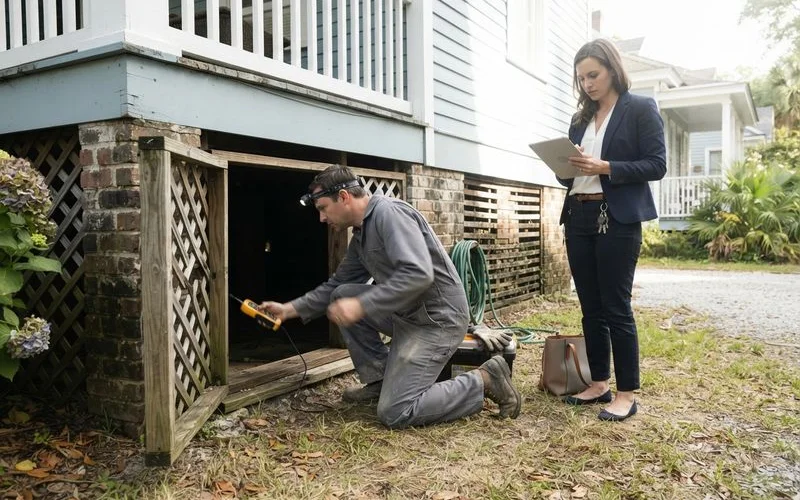
A standard home inspection is a good baseline, but it’s broad by design, covering the whole house in a few hours. It often doesn’t include moisture mapping with a meter, a close look inside HVAC ductwork, or time spent specifically hunting for signs of past mold. If anything on your walkthrough raises a question, a separate, focused mold and moisture inspection from a specialist fills that gap before you’re locked into a purchase.
Using what you find
A documented moisture reading or a mold finding gives you real bargaining power, not just a bad feeling about the house. Depending on your purchase agreement, you can typically request repairs before closing, a price reduction, or a credit to cover remediation after you take ownership. Sellers who priced the mold or water history into their disclosure are often more willing to negotiate than ones who genuinely didn’t know, so the conversation goes differently depending on what the seller’s disclosure actually said.
What the disclosure form does and doesn’t tell you
Sellers in South Carolina typically complete a property disclosure form covering known issues, including past water damage they’re aware of. Treat it as a starting point, not the full picture. A disclosure reflects what a seller remembers and chooses to report, not an independent assessment of the property’s actual condition. A home with a clean disclosure form can still have a moisture problem the seller genuinely never noticed, which is exactly the gap a hands-on inspection is meant to close.
Timing the inspection right
Schedule any specialist inspection early enough in your contingency period that you have time to act on what it finds, negotiate, request repairs, or walk away, rather than discovering an issue with no time left to respond. It’s a small scheduling detail that matters more than it seems once you’re inside a real closing timeline.
Older homes are rarely a reason to walk away on their own. A documented, addressable moisture issue is a negotiating point; an undocumented one you find after closing is just a repair bill with your name on it. The difference comes down almost entirely to whether you looked closely enough before you signed.
Start from the homepage to compare local inspection and remediation providers before you close, and see our methodology for how they’re ranked.
FAQ
- Does a standard home inspection cover mold?
- Not always in depth. Many general inspectors note visible mold if they see it but don't do moisture mapping or check crawlspaces and HVAC ductwork as thoroughly as a mold-specific inspection would.
- What are signs of past water damage a seller might not mention?
- Fresh paint patches on ceilings or walls with no obvious reason, mismatched flooring in one section of a room, warped baseboards, and a musty smell that's stronger in one part of the house are all worth asking about directly.
- Is a crawlspace or vented foundation riskier than a slab home?
- Generally yes, for moisture-related issues specifically. Vented crawlspaces in a humid climate like Charleston's are prone to condensation and standing water that can go unnoticed for a long time if not checked regularly.
- Can I negotiate based on what an inspection finds?
- Often, yes. Documented moisture or mold findings can support a request for repairs, a price adjustment, or a credit at closing, depending on how your purchase agreement handles inspection contingencies.
Related on this site
- Browse mold remediation providers
- What mold remediation costs in Charleston and what changes the price
- What to expect during a mold remediation job in Charleston, step by step
- DIY mold removal vs hiring a pro in Charleston: when each makes sense
- Mold exposure health risks in Charleston homes: what's real and what's overblown
- All guides →