Getting ready for hurricane season in Charleston: protecting your home from water and mold damage
By Priya Tan · Updated 2026-07-14
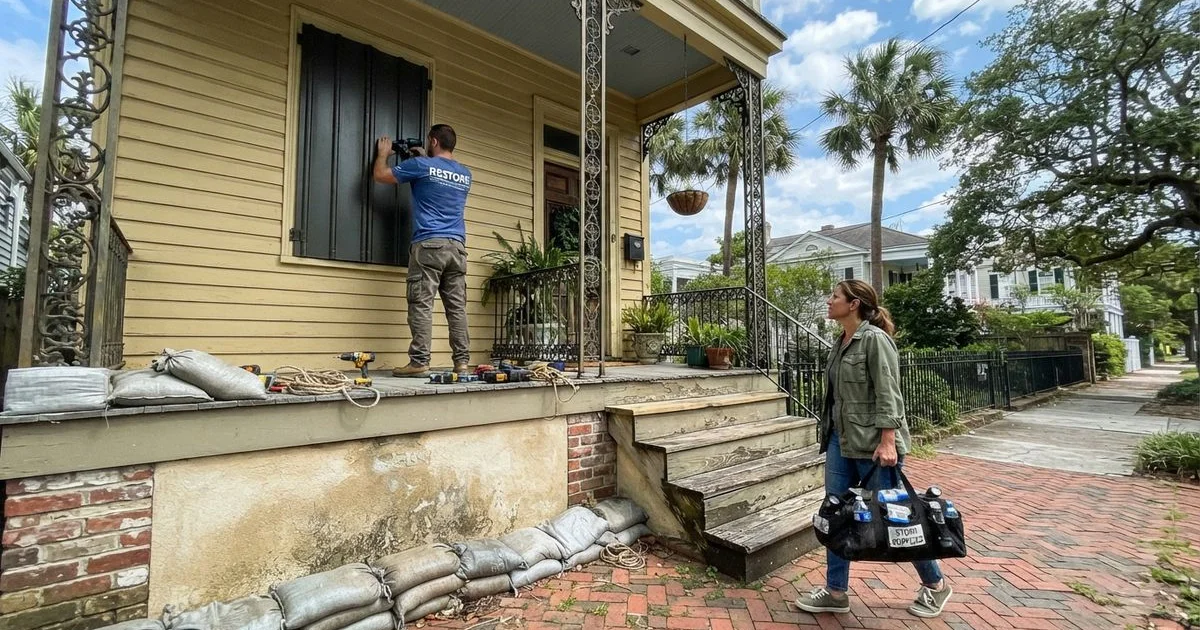
Charleston’s hurricane season runs roughly June through November, and the bigger risk for most homes isn’t the storm itself, it’s what happens to water that gets in and doesn’t dry out fast enough afterward.
Before the season starts
A few checks make a real difference once storms actually threaten the area:
- Clean gutters and downspouts so rainwater drains away from the foundation instead of pooling against it.
- Check crawlspace vents and any vapor barrier for damage or gaps, since a compromised crawlspace is one of the most common sources of storm-related moisture.
- Confirm a sump pump, if you have one, actually works, not just that it’s installed.
- Locate a generator or battery backup option for a dehumidifier if you expect extended power outages.
Before a specific storm arrives
| Task | Why it matters |
|---|---|
| Move valuables and documents to a higher level | Limits loss if water enters lower floors |
| Photograph the property’s current condition | Useful baseline if you need to file a claim later |
| Clear yard drainage paths | Reduces water pooling near the foundation |
| Charge phones and check flashlight batteries | Power outages are common during and after storms |
| Confirm your insurance covers what you think it does | Flood and wind damage are often handled differently |
Flood insurance and standard homeowners coverage treat storm water differently depending on whether it came in as rising water or wind-driven rain through a roof or window. It’s worth confirming which applies to your situation before a storm, not after.
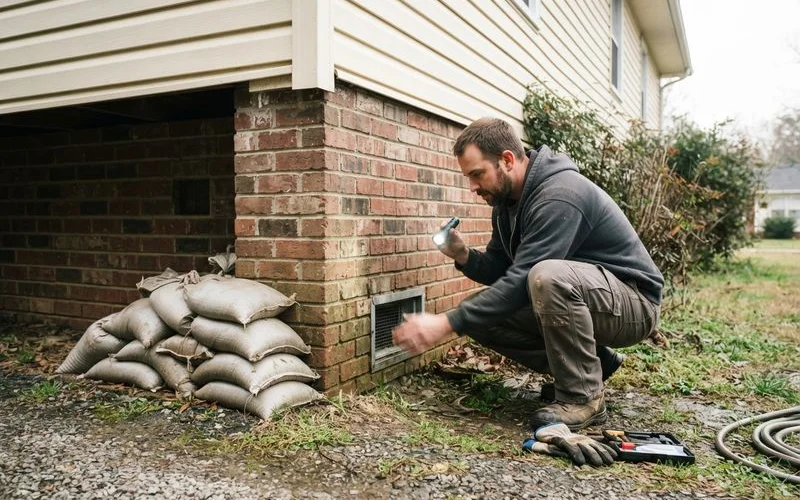
Older Charleston homes need a closer look
Historic housing stock and homes built on crawlspaces or piers carry a different risk profile than newer slab construction. Raised foundations mean more vented, humid space under the house where water can sit unnoticed after a storm. Older plumbing and roofing are more likely to have small existing weaknesses that a heavy storm turns into a real leak. If your home falls into either category, it’s worth a pre-season walkthrough with a contractor who knows what to look for in crawlspace vapor barriers, old flashing, and aging roof penetrations, rather than relying on a visual check from the ground.
Why power outages matter more than people expect
A house that loses air conditioning during a hot, humid stretch can climb into mold-friendly humidity levels within a day or two, even without any water intrusion at all. Add in a roof leak or a small amount of water that got past a window seal, and the conditions for growth are set well before anyone notices a smell. If you’re without power for more than a day during warm weather, treat it as a reason to check for moisture, not just an inconvenience to wait out.
Right after the storm
Check for standing water, roof leaks, and window intrusion as soon as it’s safe to move around the property. Get air moving through anything wet, open windows if conditions allow, run fans, use a generator-powered dehumidifier if the power’s out. The same 24-to-48-hour window that applies to any water event applies here too, storm damage doesn’t get special treatment from mold.
After the immediate cleanup
Once the water’s out and things are drying, don’t consider the job done just because nothing looks wet anymore. Materials can feel dry to the touch while still holding enough moisture to feed mold growth over the following weeks. If your home took on any real amount of water during a storm, a follow-up moisture check a week or two later is a reasonable step, especially in spots that are hard to fully dry, like a crawlspace or the space behind baseboards.
If storm damage turns into a bigger job
Widespread storm damage means restoration companies get busy fast, so it’s worth having a couple of options in mind before you actually need one rather than searching cold in the middle of storm season. Start from the homepage to see local providers, and check our methodology for how they’re ranked.
FAQ
- When is hurricane season in Charleston?
- The Atlantic hurricane season runs from June through November, with the highest activity typically in late summer and early fall. Prep is worth doing well before storms are actually forecast.
- Why does a power outage during a storm raise mold risk?
- Without air conditioning or a dehumidifier running, a closed-up, humid house can hit the moisture levels mold needs within a day or two, especially if any water got in during the storm itself.
- Does homeowners insurance cover storm surge flooding?
- Generally not. Rising water from storm surge is typically a flood insurance matter, separate from a standard homeowners policy. Wind-driven rain that gets in through a roof or window is usually treated differently.
- What should I do first after a storm passes?
- Check for standing water and roof or window intrusion before anything else, and get air moving through any wet areas as soon as it's safe to do so. The clock on mold growth starts as soon as materials are wet, storm or no storm.