Is hidden mold in your HVAC or walls making you sick? What to look for
By Priya Tan · Updated 2026-06-10
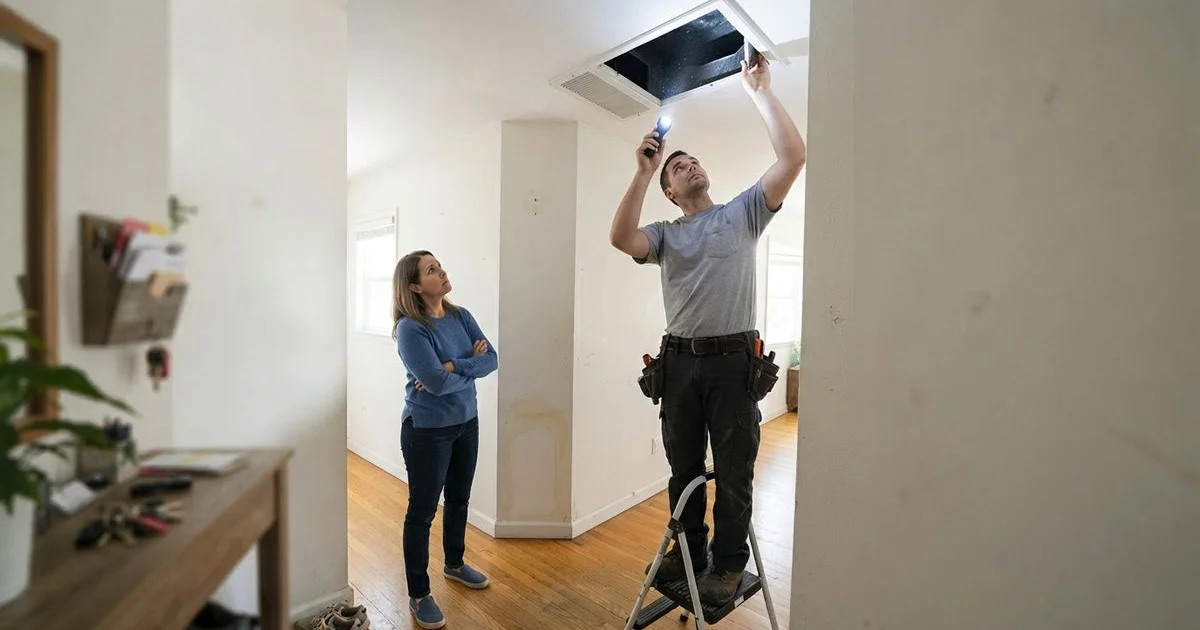
Sometimes the mold you can see is the smaller problem. A musty smell with nothing visible, or symptoms that come and go with time spent at home, often point to growth inside a wall, under flooring, or circulating through the HVAC system. This is general health information, not medical advice; if symptoms are ongoing or severe, talk to a doctor.
Signs worth paying attention to
- A musty smell that’s stronger in one room, or that gets noticeably stronger right when the AC or heat turns on.
- Allergy-like symptoms, congestion, coughing, itchy eyes, that ease when you’re away from home and return once you’re back.
- Visible discoloration or growth around air vents, the air handler, or a drip pan.
- A previous water event in the home, a leak, a flood, a slow plumbing drip, that was dried out but never professionally inspected afterward.
None of these confirm hidden mold on their own, but two or more together are a real reason to get an inspection rather than wait it out.
Why HVAC mold is easy to miss and easy to spread
Mold inside ductwork or on an evaporator coil isn’t just localized. Every time the system runs, it can push spores into whatever rooms that duct run serves, which is why symptoms sometimes show up in a bedroom far from the actual growth. A visual inspection that only checks visible rooms and skips the air handler, coil, and duct runs can miss the source entirely and still document the property as clear.
| Location | How mold typically gets there | Why it’s easy to miss |
|---|---|---|
| HVAC ductwork | Condensation, humidity buildup near coils | Hidden inside the system, spreads via airflow |
| Wall cavity | A leak or condensation with no exterior sign | No visible growth until it’s advanced |
| Under flooring | A slow subfloor leak or crawlspace moisture | Covered by flooring material |
| Behind baseboards | Splash or seepage near exterior walls | Low visibility, rarely checked routinely |
Getting the inspection right the first time
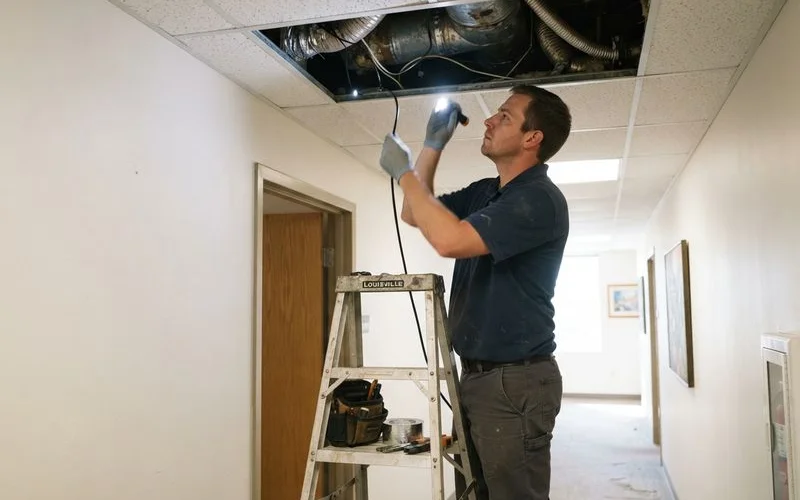
Not every inspection covers the same ground, and a missed spot means the actual source keeps growing while everyone assumes the problem is solved. Before booking, ask specifically whether the inspection includes the HVAC air handler and accessible ductwork, wall cavities near any known past leak, and subfloor areas if there’s a crawlspace. A thermal camera or moisture meter reading in these spots costs little extra time and catches what a purely visual walkthrough tends to miss.
Why this happens more in Charleston homes
Older housing stock here often has crawlspaces, vented rather than sealed, and HVAC ducts routed through humid, unconditioned spaces. That combination gives condensation more places to collect and more time to sit before anyone notices. Newer builds aren’t immune either: a sealed, well-insulated house can trap humidity just as effectively if the HVAC system isn’t sized or maintained properly. Either way, the moisture has to come from somewhere, and finding that source is what actually stops the problem instead of just treating the current growth.
What to do if symptoms point to hidden mold
If your pattern of symptoms lines up with time at home and a visual inspection came back clear, it’s reasonable to push for a more thorough check rather than assume nothing’s there. Mention the specific pattern, when symptoms started, what makes them better or worse, so the inspector knows where to look harder. A second opinion is a normal, reasonable step here, not an overreaction. Keep a simple log for a week or two: which room you were in, roughly what time, and how you felt. That pattern is genuinely useful information to hand an inspector, and it often points them toward a specific duct run or wall section faster than a general complaint of “something feels off in this house.”
Compare Charleston mold remediation providers who handle full HVAC and structural inspections, and see our methodology for how rankings are built. Browse the full directory from the homepage.
FAQ
- What are the signs of mold hiding in HVAC ductwork?
- A musty smell that gets stronger right when the system kicks on, allergy-like symptoms that ease when you leave the house, and visible growth around vents or the air handler itself are the main signals worth checking.
- Can mold behind a wall make you sick without any visible sign?
- Yes. A musty odor with no visible growth is one of the more common ways hidden mold shows up, since drywall and framing can hide contamination that hasn't reached the surface yet.
- Should I stop running my AC if I suspect duct mold?
- It's reasonable to turn off the system or close off the affected zone until it's inspected, since running it can spread spores to every room the ducts serve.
- Will a standard mold inspection always catch it?
- Not automatically. Ask specifically whether HVAC ductwork, the air handler, and wall cavities near known moisture sources are part of the inspection, since a visual-only walkthrough can miss all three.
Related on this site
- Browse mold remediation providers
- What mold remediation costs in Charleston and what changes the price
- What to expect during a mold remediation job in Charleston, step by step
- DIY mold removal vs hiring a pro in Charleston: when each makes sense
- Mold exposure health risks in Charleston homes: what's real and what's overblown
- All guides →